
Overstimulated minds. Underused bodies.
Author: Sander Ponnet, co-founder
Wealth ≠ Wellbeing
We have become very good at making life easy. We keep our homes warm when we are cold and cool when we are hot. When we are hungry, food is rarely more than a few minutes away, and when we are bored, there is an almost endless stream of things waiting to occupy our attention. A small rectangle in our pocket can answer almost any question before we have even had the chance to wonder about it ourselves.
And still, many of us feel tired.
Not the good kind of tired you feel after spending a long day outside, when your legs are heavy and your mind is quiet. Something different. A restless kind of tired. A mind that keeps running long after the body wants to stop. A feeling of being constantly stimulated, while at the same time not really feeling present.
Perhaps the problem is not that life has become too difficult. Perhaps, in some ways, it has become too easy.
Our bodies were shaped in a world of movement, uncertainty and physical demands. We walked because there was somewhere to go. We carried what we needed. We climbed. We searched. We slept outside. We dealt with cold and heat. We went without food when there was nothing to eat. We had to pay attention to the environment around us because the environment mattered.
We are not saying that life should be hard. We are not interested in romanticising suffering or pretending that everything our ancestors experienced was somehow healthier.
But we do believe that the body needs something to respond to.
That is the idea behind Intermittent Living.
It is not about living permanently in discomfort, nor is it about constantly pushing yourself into some kind of survival mode. It is about rhythm. A deliberate movement between effort and rest, between comfort and discomfort, between exposure and shelter. There are moments when you ask something from the body, and there are moments when you allow it to recover.
A cold morning followed by warmth. A long day on your feet followed by sleep. A difficult climb followed by food and rest. A period of uncertainty followed by safety.
The challenge is only one part of the process. What happens afterwards matters just as much.
This idea is closely related to the principle of hormesis, where a small and controlled stressor can stimulate an adaptive response in the body. Strength training is perhaps the easiest example to understand. You place the muscles under load, they experience stress, and then you recover. Over time, the body adapts and becomes better prepared for the next challenge.
Similar ideas are being explored in relation to cold exposure, heat, fasting and physical exercise. But there is an important distinction to make: more stress is not automatically better.
A body that is already dealing with chronic stress does not necessarily need another challenge. Sometimes the most useful thing you can do is sleep. Sometimes it is to eat properly, move without pushing yourself, spend time outside or simply allow your nervous system to settle.
A cold shower will not fix your life. A fast will not make you invincible. And suffering is not a virtue.
The interesting part is what happens between the challenge and the recovery.
You ask something of the body.
Then you give it time.
And slowly, it learns.
Heat
Heat teaches something different.
You can not fight it. You can not negotiate with it. You have to slow down, drink, find shade and pay attention to what your body is telling you.
In a sauna, there is nowhere to go. You sit. You sweat. You wait.
Heat exposure places a demand on the body's ability to regulate temperature, and regular sauna use has been associated with a range of cardiovascular and other health benefits. But once again, the value is not in simply enduring as much heat as possible.
Sometimes resilience looks like continuing when something is difficult.
Sometimes it looks like recognising that you have had enough and stepping outside.
Knowing the difference is part of the practice.
Hunger
We live surrounded by food.
For most people, hunger is rarely a question of whether food exists. It is a question of when we decide to eat it. We can open a cupboard, walk into a shop or order something within minutes.
An expedition changes that relationship.
You know what you have in your pack. You know how far you still have to walk. You become more aware of what hunger actually feels like because there is no immediate need to silence it.
Fasting can change how the body uses energy and can trigger a range of metabolic processes. It is also an area where scientific research continues to evolve, and we do not see fasting as a universal solution or something everyone should practise.
What interests us is the experience itself.
You feel hunger.
You notice it.
And you realise that hunger is a sensation, not necessarily an emergency.
Sometimes, when you stop answering every sensation immediately, you start listening to it differently.
Sleep and recovery
The challenge is only half of the story.
The other half is recovery.
This is perhaps the easiest part of Intermittent Living to overlook because it is much less exciting. It does not look impressive from the outside. Nobody takes a photograph of someone sleeping for nine hours and calls it an expedition.
But recovery is where adaptation happens.
Without sleep, food, rest and enough time between challenges, stress simply accumulates. There is a point where deliberate exposure stops being useful and becomes another burden.
We are not interested in how much discomfort someone can tolerate.
We are interested in creating enough challenge to stimulate adaptation while respecting the need to recover.
Mental challenge
Not every challenge is physical.
Sometimes the difficult part is navigating through unfamiliar terrain when you are tired. Sometimes it is making a decision when the weather changes. Sometimes it is taking responsibility for someone else or working with people you have never met before.
Sometimes the challenge is simply doing something you are not immediately good at.
An unfamiliar environment removes some of the usual control we have over our lives. You cannot always predict the weather. You cannot always know exactly how long a route will take. You cannot control how other people will respond.
You have to adapt.
You learn to make decisions with incomplete information. You learn to communicate when you are tired. You learn when to push and when to turn around. You learn that changing the plan is not necessarily failure.
Sometimes the strongest decision is to stop.
When things don't go to plan
This is where an expedition starts to show its real character. The weather can turn, someone can run out of energy, a route can take longer than expected, or a trail that looked straightforward on the map can become a completely different story once you are actually there. Sometimes you miss a turn or realise that the plan you made that morning simply no longer fits the conditions in front of you.
That is part of being in the mountains. You cannot plan everything, and you cannot control everything.
What matters is how you respond when things change. You look at the situation as it is, rather than how you expected it to be. You talk to the people around you, reassess what is possible and decide what makes the most sense from there. Sometimes that means carrying on. Sometimes it means changing the route, slowing down or turning back altogether.
There is no failure in changing a plan. In the mountains, stubbornly sticking to a plan that no longer makes sense is often a much bigger mistake than changing it.
The ability to adapt matters more than the ability to follow a plan.
What doesn't kill you makes you stronger
The phrase is familiar, and there is some truth in it, but only if we are careful about what we mean by it. Not everything that does not kill you makes you stronger; some experiences simply hurt you, and some leave lasting damage. We are not interested in glorifying suffering or turning an expedition into a test of how much discomfort someone can endure. For us, the value lies in the relationship between challenge, preparation and recovery.
An expedition should take you beyond what feels familiar, but it should also give you enough space to understand your own limits and learn the difference between discomfort that you can move through and a situation in which you need to stop, adapt or change direction. There will be moments when your legs are tired, your shoulders hurt, the weather is miserable and your mind starts telling you that you have had enough. Sometimes that voice is right, and the right decision is to stop.
But there will also be moments when the discomfort is simply uncomfortable, rather than dangerous, and taking another step becomes a choice rather than a necessity. You walk a little further, breathe, adjust your pace and discover that what felt overwhelming a few minutes ago is still difficult, but manageable. Those moments matter because they change the way you relate to discomfort. You begin to understand that you do not have to remove every difficult feeling immediately, and that being uncomfortable does not automatically mean that something is wrong. That, to us, is where resilience begins: not in becoming invincible, but in learning that you can meet difficulty without being defined or controlled by it.
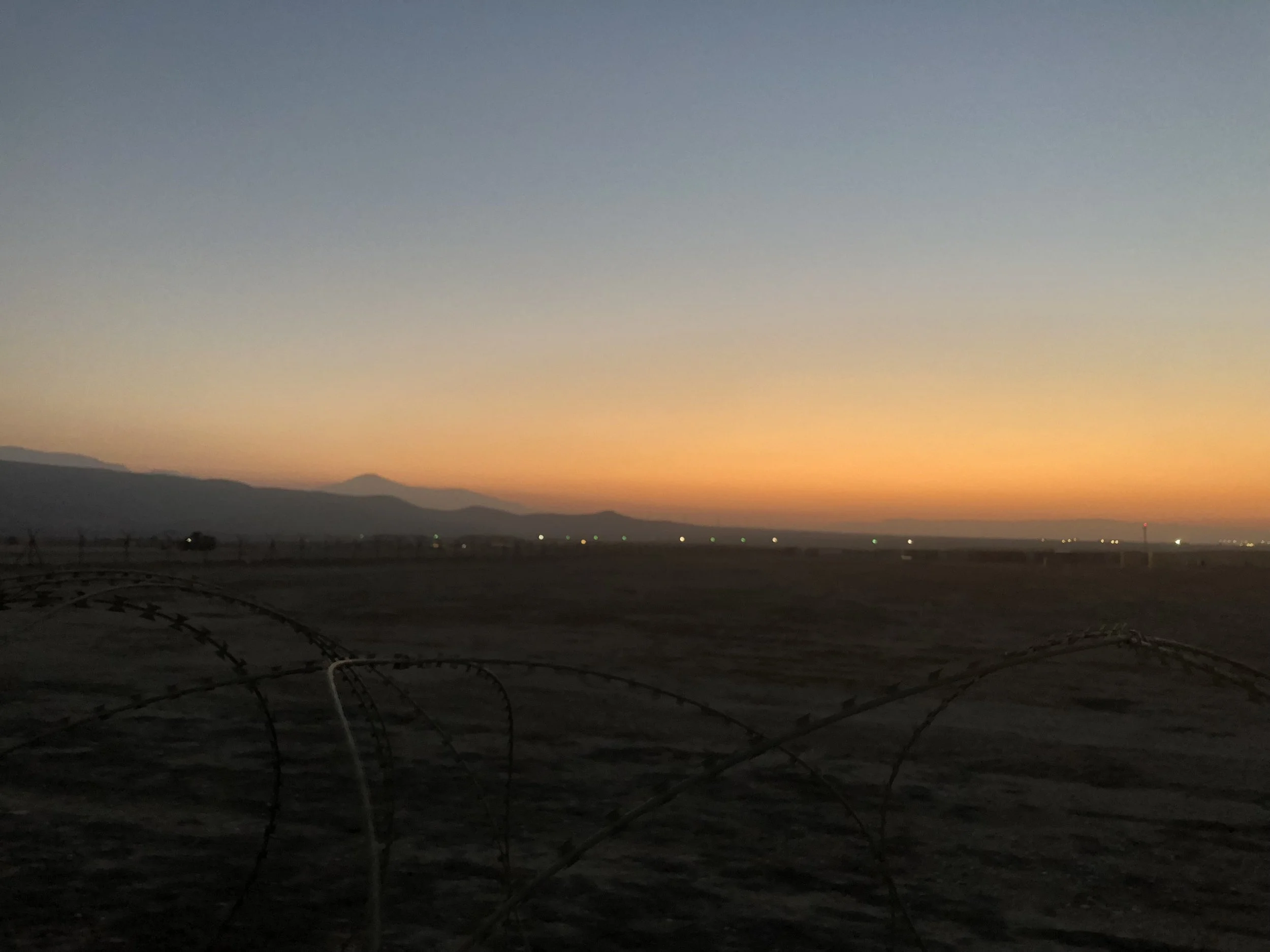
Afghanistan ‘19
From chronic stress to acute challenges
There is an important difference between a short, manageable challenge and stress that never really switches off.
A difficult climb has a beginning and an end. You start climbing, you work hard, and eventually you reach the top. A cold river crossing begins when you enter the water and ends when you are standing on the other side, drying yourself and warming up again. A long day carrying a heavy pack may leave you exhausted, but eventually you take the pack off.
Your body responds to the challenge, and then it gets a chance to recover.
Modern stress can be very different.
Deadlines, notifications, screens, traffic, work, messages and constant availability can create a continuous background noise that is difficult to escape. There is often no clear moment when the system gets to switch off. Even when we are resting, we are often still consuming information.
This is where acute and chronic stress begin to feel very different.
An acute challenge has a clear beginning and a clear end. It asks something from you, and then it lets you go.
Chronic stress simply stays.
We are not suggesting that people should deliberately add more stress to an already overloaded life. Quite the opposite. But perhaps there is value in learning to distinguish between the stress that drains us and the challenges that ask us to adapt.
That is where Intermittent Living becomes interesting.
Cold
Cold has a way of removing everything unnecessary.
You step into cold water and suddenly there is very little room for anything else. Your breathing changes. Your heart rate rises. Your attention narrows. Your body reacts before your mind has finished negotiating with it.
There is something valuable in that moment.
Not because cold is magical, and certainly not because every person needs to expose themselves to extreme temperatures. The potential health effects of cold exposure are still being studied, and it is easy to make claims about cold that go far beyond the evidence.
What interests us is simpler.
You experience the moment between "I don't want this" and "I can handle this."
You learn to breathe while your body is telling you to get out.
You learn that discomfort does not always require an immediate reaction.
And that lesson extends far beyond cold water.
Movement and physical effort
There is something deeply satisfying about carrying everything you need on your back.
Your shelter. Your food. Your water. Your clothes.
Everything has a weight.
Nothing about it is particularly complicated. You walk.
For hours, the body gets warm, the legs become heavy and the mind begins to wander. At first, you may still be thinking about the things waiting for you at home. The emails you have not answered. The work you have left behind. The things you should be doing.
Then, somewhere along the way, something changes.
The noise gets quieter.
There is only the trail, the person walking beside you, the rhythm of your breathing and the next place to put your foot.
Perhaps that is one of the simplest forms of meditation we have left.
Movement does not have to be complicated. We are built to walk, carry, climb and move through uneven environments. Physical effort reminds the body of its capacity, but it also reminds the mind that tiredness is not always a problem that needs to be solved.
Sometimes you simply keep walking.
Food, water and the return to awareness
Modern life has also changed the way we relate to food and water.
There is almost always something to eat, and there is almost always a bottle of water within reach. We can consume without really noticing whether we are hungry or thirsty.
An expedition changes that.
You know how much water you have. You know how far you have to go. You begin to pay attention to the signals coming from your body.
This does not mean that dehydration is useful or that drinking water is something to avoid. It simply means that there is value in becoming aware of what your body is actually asking for instead of automatically responding to every small sensation.
The same applies to food.
When you carry your own meals and know that the next one is still several hours away, food becomes more than something consumed between meetings. You notice hunger. You notice energy. You notice how different foods affect the way you move.
There is something grounding about that simplicity.
You don't go outside to escape life
We do not go outside because we want to escape life.
We go outside because we want to meet it without so many filters.
No office. No traffic. No endless notifications. No comfortable chair waiting five metres away.
Just weather, terrain, people and time.
You discover things about yourself when you are tired. You discover things about other people when they are tired.
A group of strangers can become a team remarkably quickly when everyone has the same mountain to climb. Someone carries a little more. Someone navigates. Someone makes coffee. Someone notices that another person has gone quiet.
None of these things are particularly dramatic.
But they matter.
There is a simplicity to being responsible for yourself while also being responsible for the people around you. You begin to notice small things. Who needs a little more food. Who is struggling but not saying it. Who stays calm when everyone else becomes frustrated.
The environment creates situations that reveal things you cannot always see in a normal conversation.
Pre-expedition preparation, crucial
We do not believe resilience means becoming harder or learning to push through everything that feels difficult. Real resilience is perhaps better understood as the ability to stay present and make good decisions when circumstances become uncomfortable, uncertain or simply different from what you expected. That is something you can train, long before you ever arrive in the mountains. It can mean learning to breathe before you react, staying focused when you are tired, continuing with a difficult task when your first instinct is to stop, or accepting that you cannot always control how a situation unfolds. It also means learning the other side of resilience: recognising when pushing further no longer serves a purpose, when your body is telling you something important, and when changing the plan is the stronger decision.
The goal is not to become someone who never struggles, because struggle is an unavoidable part of life. It is to become more familiar with difficulty, so that when things do become difficult, you have a greater capacity to remain calm, think clearly and respond rather than simply react. An expedition gives you the opportunity to practise these things in a very tangible way, but the real value begins long before the first step on the trail and continues long after you return home.
Why SØRE exists
We do not think people need more information. Most of us already know that we should move more, sleep better, spend more time outside and take better care of ourselves. We have access to more knowledge about health, performance and wellbeing than ever before, yet knowing what is good for us does not necessarily mean that we experience it in our daily lives. There is a difference between understanding something intellectually and feeling it in your own body, and that difference is one of the reasons SØRE exists.
We want to create experiences in which people can step away from the constant stream of information and return to something much more basic. During an expedition, you feel your breathing change when the terrain becomes steep, you notice the weight of your pack after several hours of walking, and you discover that tiredness does not always mean that something is wrong. You experience what it is like to spend an evening without the usual distractions, to sit around a fire with people you barely knew a few days earlier, and to realize how quickly a group of strangers can become a team when they have to rely on one another.
There is a simplicity to being outside for several days that is difficult to recreate anywhere else. You carry what you need, move through the landscape under your own power, pay attention to the weather and terrain, and accept that sometimes the plan has to change because reality does not care what you had written down that morning. Someone becomes tired, the route takes longer than expected, the weather turns, or a decision has to be made with incomplete information. These moments are rarely dramatic, but they reveal something about how we respond when some of the usual layers of comfort and control are removed.
That is not a holiday, but it is not a survival competition either. We are not interested in seeing who can suffer the most or who can push themselves furthest. An expedition should challenge you, but it should also teach you to recognise your own limits and to understand the difference between discomfort that you can move through and a situation in which you need to stop, adapt or change direction. The ability to make that distinction is far more valuable to us than simply being able to endure more.
The basics first. Then comes the depth.
This is also why we believe that the basics come first. A strong and capable body is not the ultimate goal, but it provides a foundation from which many other things become possible. When you develop physical capacity, learn to regulate yourself under pressure and become more comfortable with uncertainty, you create more room to be present, to make considered decisions, to connect with other people and to experience the world around you without constantly needing to control it. Physical resilience does not solve every problem, and neither does mental toughness, but having a body and mind that can carry you through difficulty gives you a certain freedom.
That freedom is easy to overlook when life is comfortable. We can organise almost everything around avoiding discomfort, and there is nothing inherently wrong with that. Comfort is one of the great achievements of modern life. The problem begins when comfort becomes the only environment in which we feel capable of functioning. If every difficult sensation has to be removed immediately, every uncertain situation controlled and every moment of silence filled, we gradually lose some familiarity with the experiences that are simply part of being human.
We believe the basics are therefore worth returning to: movement, physical effort, food, sleep, exposure to the elements, time outside, meaningful connection and enough recovery to allow the body to adapt. None of these ideas are particularly new, and that is precisely the point. We are not trying to invent a new way of living. We are trying to create situations in which people can experience some of these basic human capacities again, away from the routines that make them easy to forget.
A strong body is not a goal in itself. It is a basis. When you have more physical, mental and emotional capacity, you create space for other things: for being present, for making choices when circumstances are uncertain, for connecting with people, for experiencing silence and for remaining open to what is happening around you. Resilience, in that sense, is not about becoming invulnerable. It is about having enough capacity to keep moving when life itself begins to move.
The expedition eventually ends. The mountain disappears behind you, the pack goes back into the cupboard, and you return to work, traffic, screens and the ordinary rhythm of everyday life. But ideally, something comes back with you. It might be the memory of a difficult climb, the feeling of sitting around a fire after a long day, or simply the knowledge that you can remain calm when things become uncomfortable and uncertain. Perhaps you return with a little more trust in your body, a little more patience with discomfort, or a clearer sense of what actually matters when all the unnecessary things have been stripped away.
You do not become a different person by going on an expedition. You simply spend enough time outside your normal environment to see yourself a little more clearly.
And perhaps that is what we are really looking for when we go outside: not an escape from life, but a way of returning to it with a little more capacity.