
What were we thinking?
Author: Verstaen Mike, Founder-Ex military, nurse
-
Why did we decide to create this type of organisation?
-
What is the possible outcome?
-
How can we reach this outcome
Why?
We live in the most connected era in human history.
With a single touch, we can reach anyone, anywhere. We are constantly informed, constantly communicating, and constantly surrounded by voices. Yet, despite this unprecedented level of connectivity, many people experience a growing sense of loneliness, disconnection, and mental fatigue.
We live in a world where comfort and control increasingly protect us from situations that force us to tolerate uncertainty, act quickly, and take responsibility. As a result, people have fewer opportunities to truly discover and develop their physical and mental capabilities.
The way we connect has changed.
More and more of our interactions take place through digital spaces. We share, react, compare, and seek validation, often without the depth, presence, and vulnerability that define meaningful human connection. Instead of creating closeness, these interactions can sometimes reinforce cycles of comparison, overthinking, and collective worry.
We have become increasingly comfortable talking about our struggles, but talking alone does not always create resilience. At times, we risk remaining caught in analysing, repeating, and reinforcing the same thoughts together, without moving towards action, experience, or meaningful change.
Throughout human history, resilience has been shaped through shared experiences. Through belonging to a group. Through responsibility, cooperation, challenge, and contribution. Many cultures and communities around the world still place strong value on collective identity, where people are not defined solely by individual achievement, but by their connection and contribution to something larger than themselves.
Having encountered people from different backgrounds and cultures, one element repeatedly stands out: connectedness. A sense of belonging appears to be deeply rooted in human evolution — yet in today’s society, it can sometimes feel strangely unfamiliar.
Our current social discourse places significant demands on the individual. We are expected to continuously perform, improve, and succeed across multiple areas of life. Concepts such as personal responsibility and meritocracy (“you get what you deserve”) have become central values. While these ideas can inspire growth and ambition, they can also create a reality in which individuals increasingly carry the weight of success and failure alone.
At the same time, mental wellbeing has become one of the defining challenges of our time. Since the COVID-19 pandemic, concerns around psychological wellbeing have intensified, with many people experiencing increased stress, loneliness, and uncertainty. Across Europe, a significant proportion of the population is affected by mental health difficulties.
Perhaps this reflects a deeper shift in how we relate to ourselves and the world around us. As many of our basic needs have become increasingly secured, we are confronted more than ever with questions of meaning, identity, and purpose.
This brings us back to one of the most fundamental human needs: belonging. Because human beings do not only need communication.
We need belonging and shared purpose. We need experiences that remind us that we are part of something bigger than ourselves.
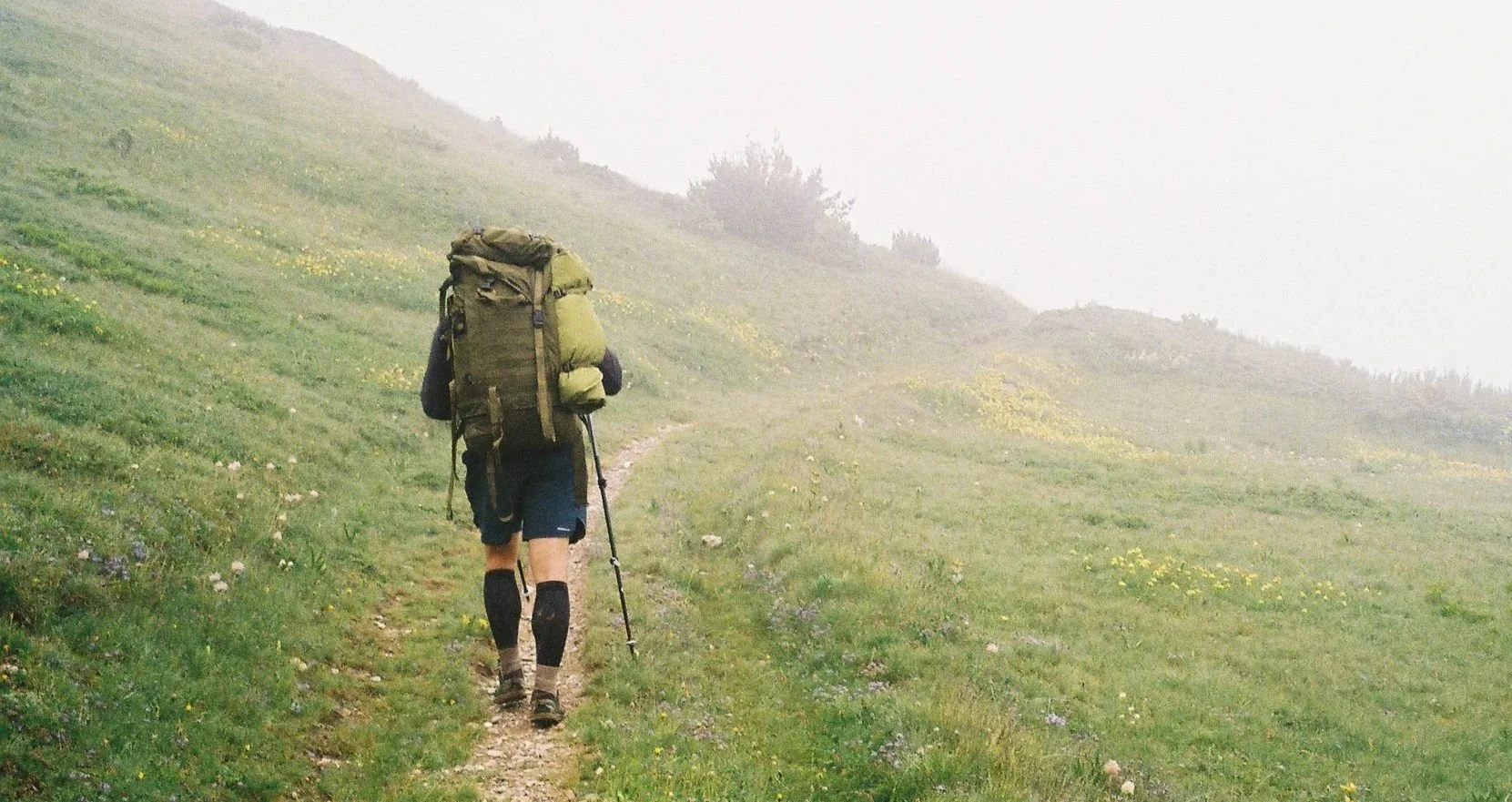
First time Albania in ‘23
My first area of conflict after being in the military for almost ten years
I had just returned from a deployment in Afghanistan. I was sitting on a tram in Ghent, finally on my way home.
On the tram, I noticed a mother with her two children. They were arguing about the use of their iPads. The emotions slowly escalated, and I could see a sense of powerlessness in the mother's eyes. She seemed overwhelmed by a situation that, at first glance, appeared so small.
Yet this brief moment deeply struck me.
The contrast was overwhelming. Only days before, I had been in Afghanistan, where I witnessed a completely different reality. I remember a young girl from a local family who had lost her mother in an incident involving the Taliban. During my deployment, I would often give her the snacks I received from the military each day.
I assumed she would eat them immediately. But that was not what happened.
One day, I saw her digging a small hole in the ground and carefully storing the snacks away for her family. After the loss of her mother, she had naturally taken on the role of caregiver — despite being only seven years old.
That moment stayed with me.
It made me reflect on the profound differences between cultures and how human beings respond to challenges depending on their environment, circumstances, and social context. The same human needs exist everywhere, but the ways in which people adapt, cope, and find meaning can be remarkably different.
These experiences sparked my curiosity about human behaviour and the role that context plays in shaping resilience. They made me question how much of our wellbeing is influenced by the environment we create around ourselves, and how much we can learn from ways of living that differ from our own.
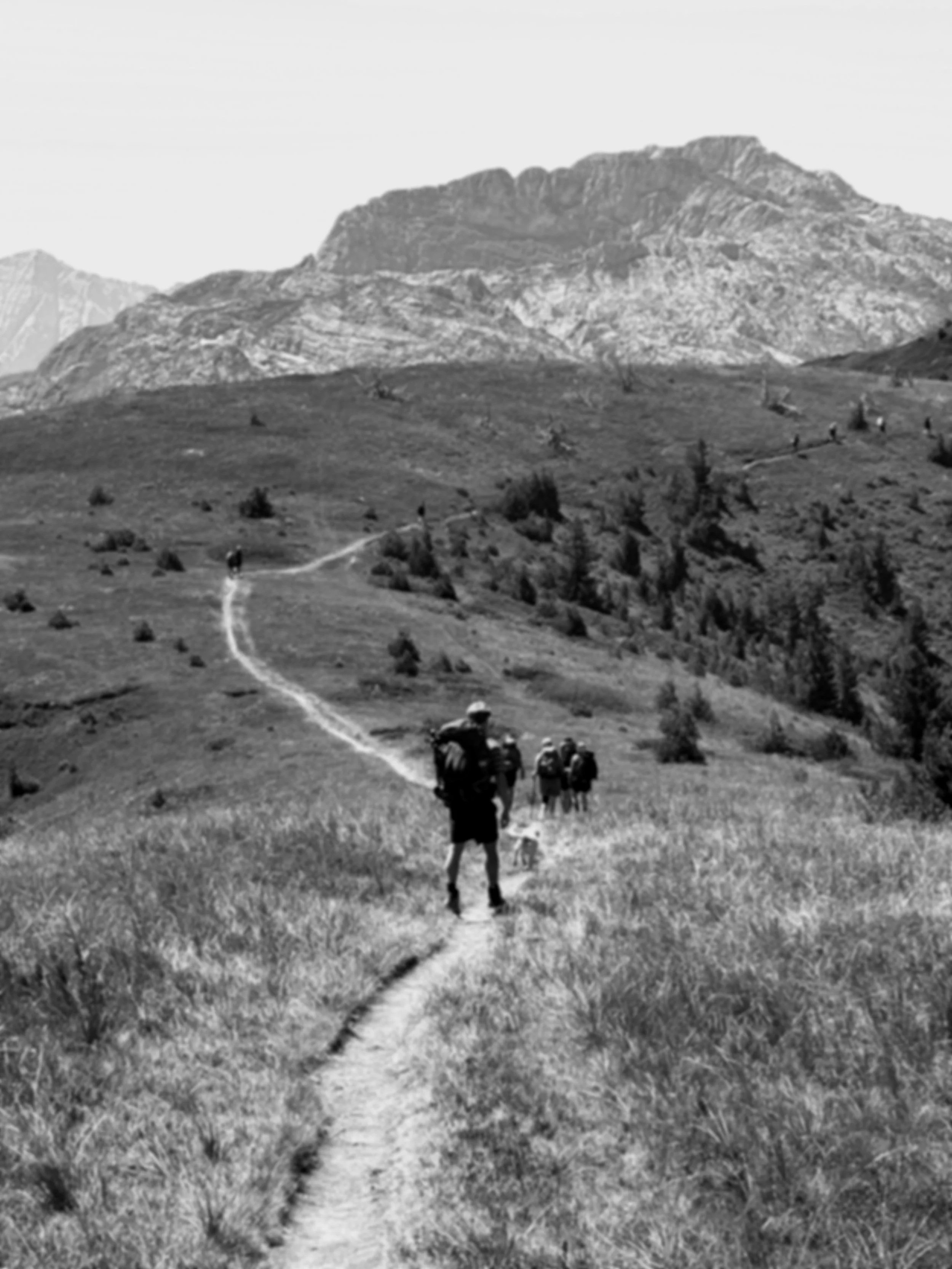
Guiding in montenegro
After many years of experiences within the military, working in mental healthcare, and studying human behaviour, I began to notice a subtle pattern in my own life. My mental resilience had always felt relatively stable, yet I noticed moments of vulnerability whenever I became overly focused on an individual narrative — the idea that everything depended solely on myself, my performance, and my ability to control outcomes.
Something changed when I immersed myself more deeply in nature, particularly in alpine environments.
Standing in vast landscapes, surrounded by mountains that had existed long before me and will remain long after me, I experienced a profound shift in perspective. I felt small — not insignificant, but connected. The complexity of my own thoughts seemed to quiet down. The constant internal dialogue became less dominant, replaced by a sense of presence and clarity.
Throughout my life, repeated exposure to demanding physical and mental challenges has also shaped my understanding of resilience. Each time I faced uncertainty, discomfort, or difficulty and managed to overcome it, I gained something beyond the achievement itself. I developed a stronger belief in my own ability to handle challenges — a sense of self-efficacy.
Perhaps resilience is not built by avoiding difficulty, nor by focusing endlessly on ourselves.
I will not attempt to reduce the complexity of our mental wellbeing into a single concept. The psyche is expansive, subjective, and inherently complex.
As an organization and as a team, we do not seek to replicate or challenge the multitude of contemporary theories and treatment modalities. Instead, we bring together a multidisciplinary team grounded in three core domains: scientific knowledge, acquired through formal education and ongoing professional development; experiential knowledge, shaped through lived experience over the course of life; and theoretical knowledge, derived from established frameworks and reflective practice.
Based on our collective experience and expertise, we strongly believe in placing greater emphasis on learning from one another and working as a team — a form of experiential learning in which we begin to think and function more as a collective system. This is rooted in trust, mutual belief, and a sustained sense of hope in progress and recovery.
What?
By giving people the opportunity to face their own challenges in a broader natural environment, we believe they can grow—not only as individuals, but also together, even if they don't know each other very well.
When Sander and I first met, I was one of his guides. I still remember that moment because it was one of my first experiences guiding in the area, and I found the logistics of the job quite challenging. It was also my first time leading such a large group.
Sander must have sensed that I could use some support—or maybe that's simply who he is, someone who's always willing to help others. He offered to take on the responsibility of making sure all the participants were always present. It sounds like a small task, but it's incredibly important.
By trusting him with that responsibility, we gradually built confidence in each other, and I think that's where our connection really began.
For me, this was a lesson in letting go of my own fears and trusting the people around me. It showed me the importance of believing in others and having confidence in their abilities.
What if repeated moments of challenge and discomfort could eventually lead to more self-efficacy?
How?
Partly shaped by my experiences within the military and healthcare, I have developed a strong belief in the power of repetition and learning through experience.
In the military, skills are trained repeatedly — sometimes hundreds of times — until they become almost automatic responses under pressure. In healthcare, we see a similar principle through simulation-based education, where professionals practice complex situations repeatedly in order to build confidence and competence.
Through my seasonal work as a mountain guide over the past years, I noticed a recurring pattern: many people naturally try to remain within their comfort zone. Discomfort feels difficult, uncertain, and sometimes even threatening. Yet, from my own experience, I have come to believe that discomfort is often where the greatest opportunities for growth can be found.
This is why we want to create opportunities and expeditions where people can challenge themselves, build confidence, and become more active participants in their own lives.
During my time as a guide, I often asked participants a simple question: “Why didn’t you do this trip on your own?”
Many people hesitated. They struggled to find an answer. But eventually, the underlying reason was often the same: comfort and security. They felt more capable knowing there was a team around them, that the route was planned, and that practical matters were taken care of.
And there is nothing wrong with seeking support. We are, after all, social beings. But sometimes growth requires taking a step into uncertainty and discovering that we are more capable than we believe.
After our expeditions, we would consider it a success if people return home with a greater sense of courage — the courage to explore unfamiliar places, take on new challenges, and step beyond the boundaries they have created for themselves.
Because through experience, we can reshape our own beliefs about what we are capable of.
We can reconnect with abilities that are not lost, but simply waiting to be rediscovered.